
Choosing a design
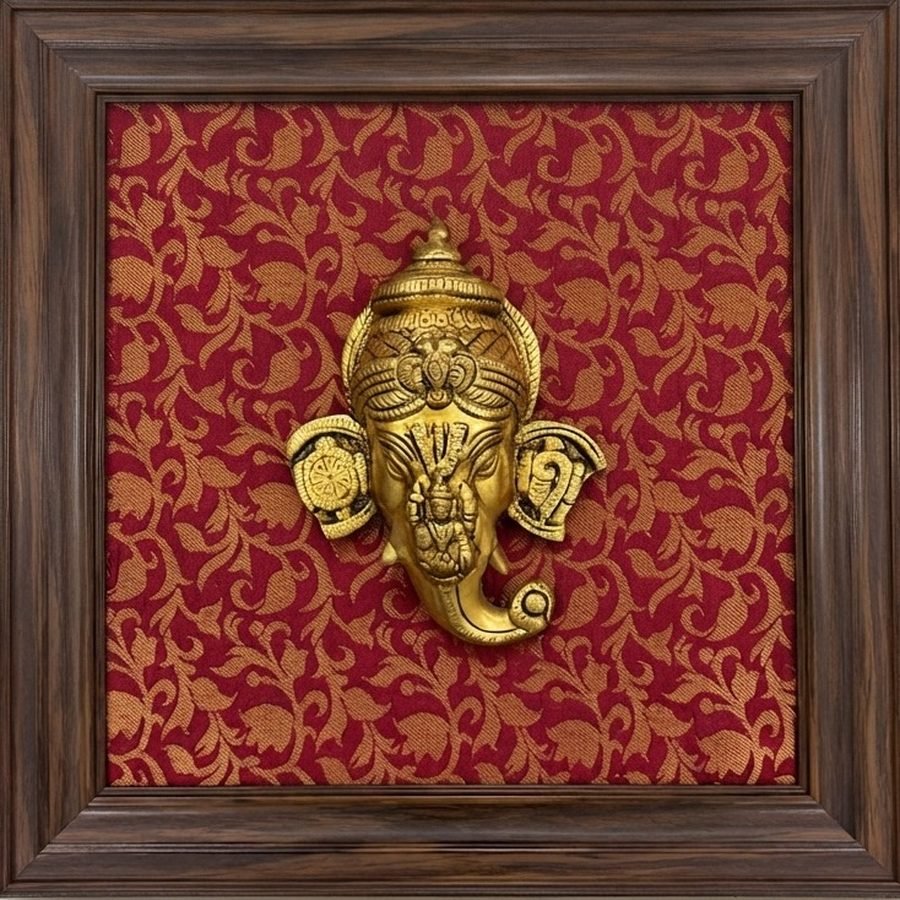
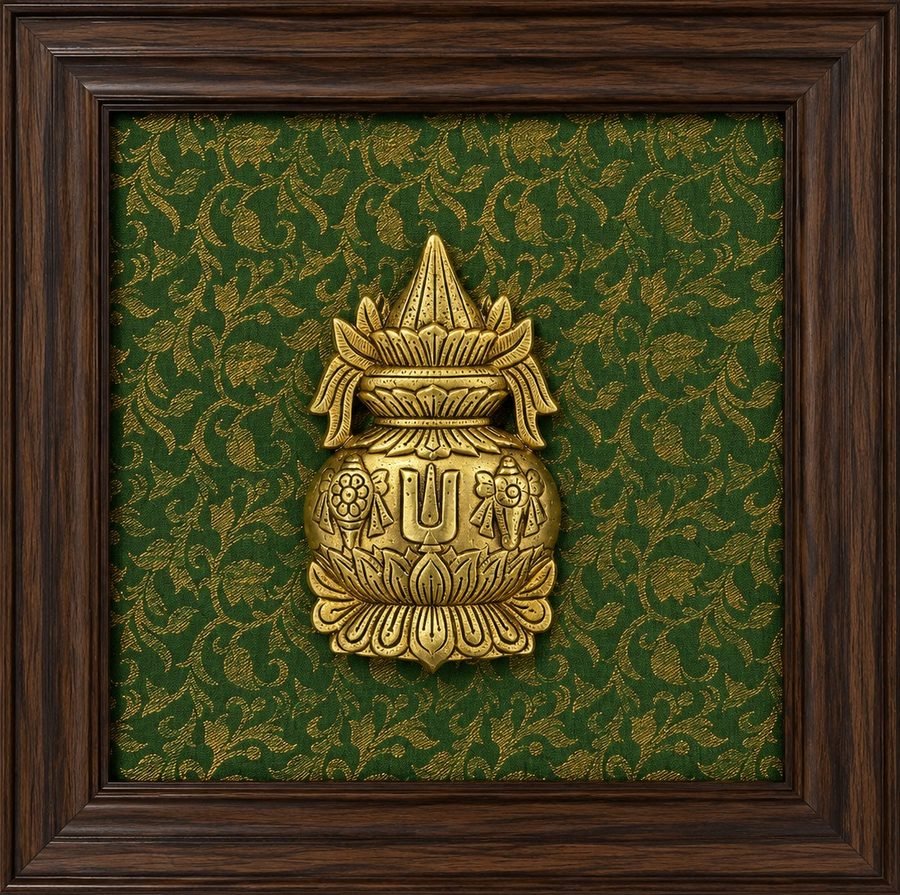
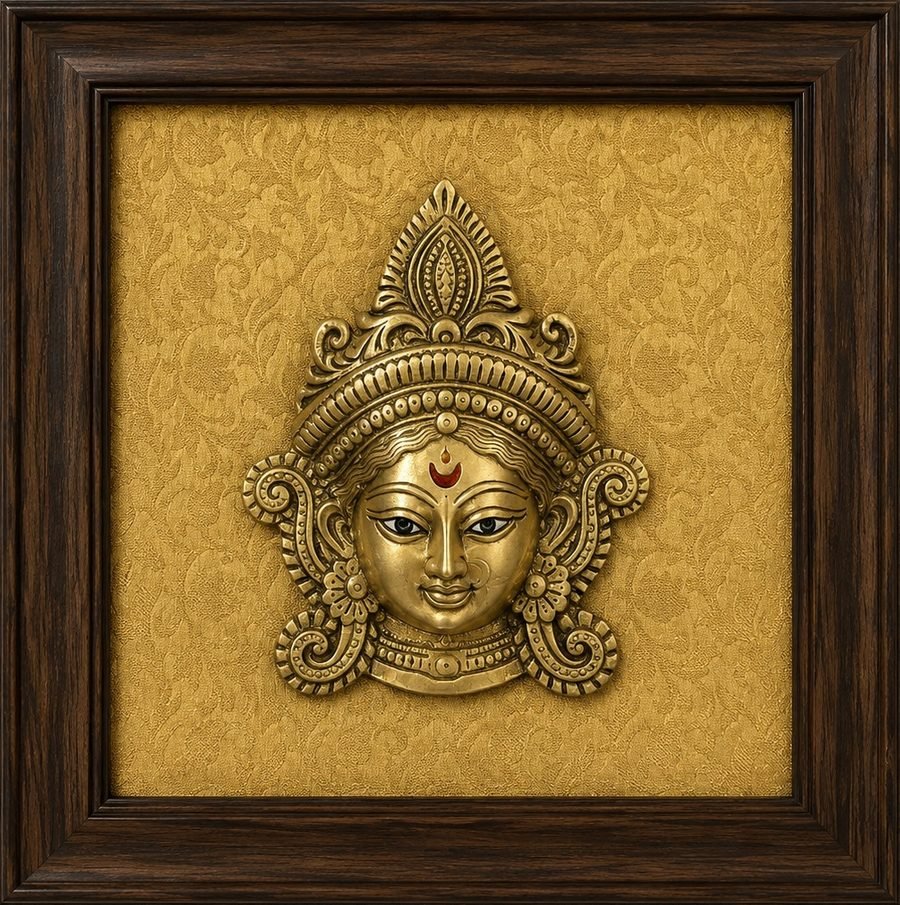
Shri Ganesha is honoured first in every puja, so he is the natural choice for a new home, a new business or any fresh start. Maa Durga brings strength and protection, and is the centrepiece of Navratri and Durga Puja. The Purna Kalash stands for abundance and is placed at the start of every auspicious ceremony. Kamdhenu with her calf is a symbol of plenty and care. The Royal Gaja and the Gaja Pair bring good fortune and togetherness. The Lotus is the seat of Maa Lakshmi, and the Kalpavriksha is the wish-fulfilling tree for a growing family.
Choosing a silk
For a warm, traditional room, antique gold, crimson and mustard feel festive and rich. For a calm, modern room, ivory and peach let the brass glow without overwhelming the wall. Emerald, navy and teal are bold jewel tones that stand out on light walls. Rani pink is joyful and celebratory, especially for weddings.
Building a set? Pick one silk for a calm, matching look, or pair two that work together, such as navy with peach, teal with gold, or crimson with emerald.
Choosing a size
The 10″ × 10″ comes in a deep moulded frame and suits pairs, grids and smaller walls. The 12″ × 12″ comes in a slim wooden frame and works well as a centrepiece, for example between two 10″ frames in a trio.
Where to hang
- Puja room: Durga, Ganesha, Lotus and Kalash, at or just above eye level.
- Entrance: Ganesha above or beside the main door, with a Kalash on each side.
- Living room: a trio above a console or sofa, or a grid of four.
- Bedroom: the Gaja Pair or Tree of Life above the headboard.
- Office or shop: Ganesha and Royal Gaja at the reception wall.
Hanging a set
Keep 5 to 8 cm between frames so the set reads as one piece, and hang the centre of the group around eye level. For a trio, put the 12″ frame in the middle. Lay the frames on the floor first to try the arrangement.
Caring for brass
Dust gently with a soft, dry cloth. Keep frames away from moisture and direct water, and avoid chemical cleaners on the brass and silk.